3.13. Collations
Collations are objects that allow for the sorting mode and character classification behavior to be specified either per column or per operation. Collations can be used to override the way data is sorted in a database, even if the database has its modes defined by LC_COLLATE and LC_CTYPE attributes.
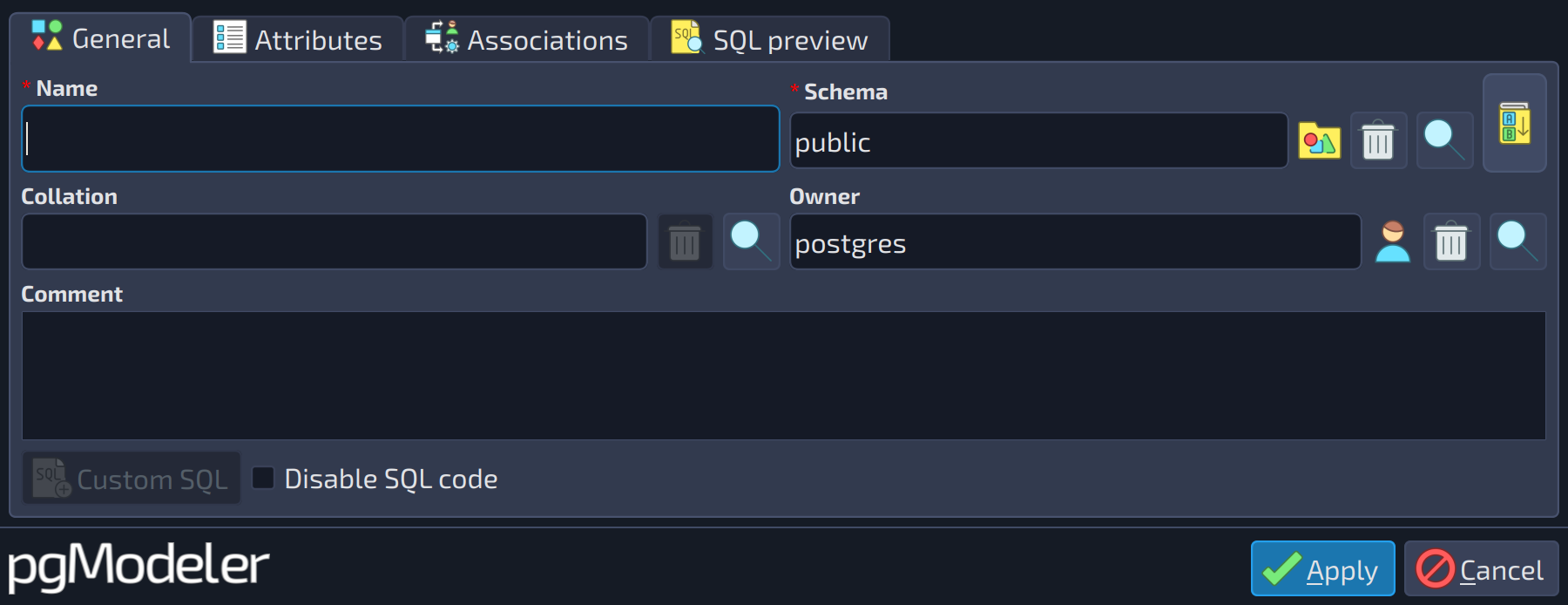 1
1
| General | ||
|---|---|---|
| # | Field | Description |
| 1 | Collation | An existing collation from which the new collation is created ( |
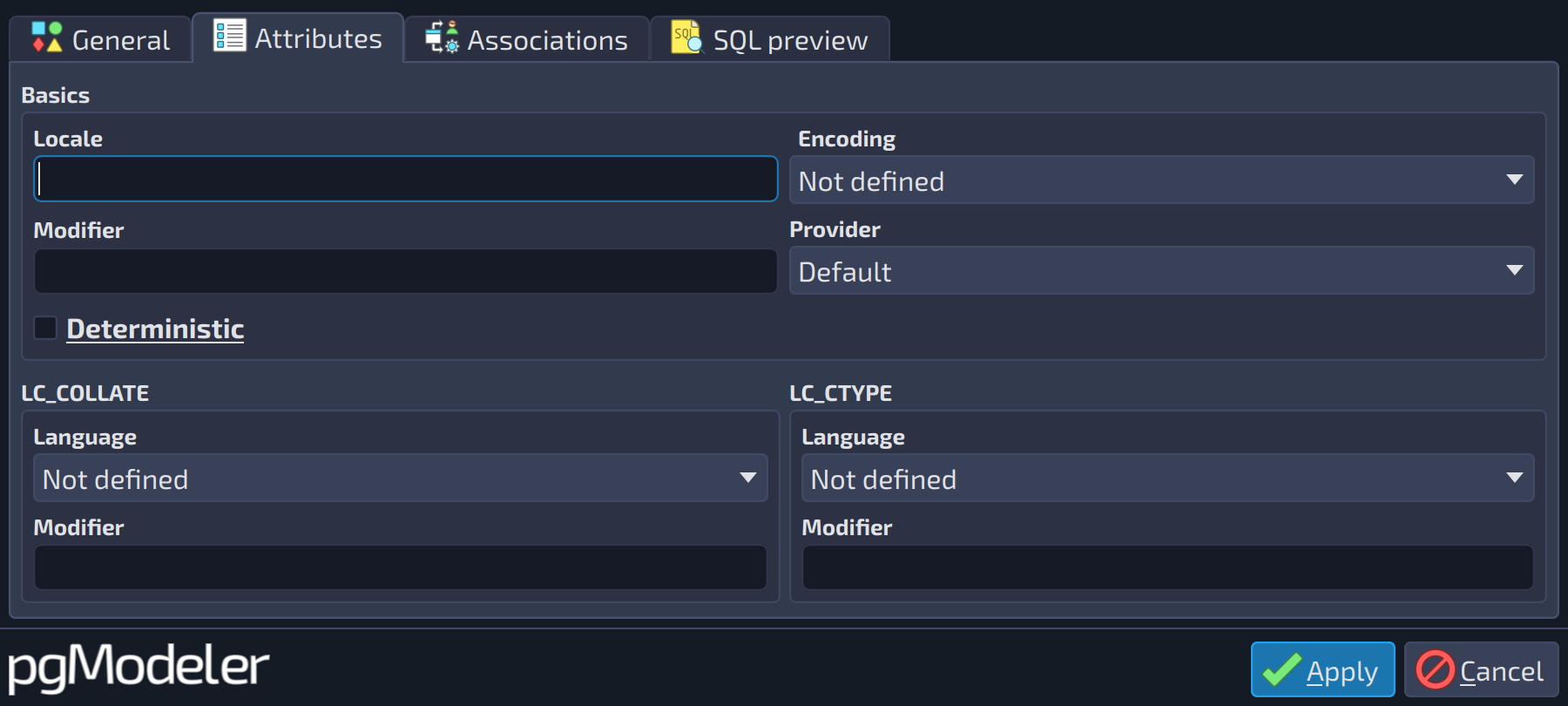 123456789
| Attributes | |||
|---|---|---|---|
| # | Field | Group box | Description |
| 1 | Locale | Basics | A shortcut to specify the attributes |
| 2 | Encoding | Basics | The character set (encoding) in which the collation works. |
| 3 | Modifier | Basics | Present in the groups |
| 4 | Provider | Basics | The provider that supplies the locale services associated with the collation: |
| 5 | Deterministic | Basics | Indicates that the collation is deterministic. A deterministic collation considers strings that are not byte-wise equal to be unequal, even if the comparison considers them logically equal. |
| 6 | Language | LC_COLLATE | The language (locale) used for string sorting ( |
| 7 | Language | LC_CTYPE | The language (locale) used for character classification, such as upper, lower, and digit ( |
| 8 | Modifier | LC_COLLATE | The modifier is any value specified after the character @. For example: en_US.utf8@modifier |
| 9 | Modifier | LC_CTYPE | The modifier is any value specified after the character @. For example: en_US.utf8@modifier |
Note: The attributes Collation, Locale, LC_COLLATE, and LC_CTYPE are mutually exclusive: you can use only one of them at a time.
References
Collation DDL
https://www.postgresql.org/docs/current/static/sql-createcollation.html