3.23. Operator classes
Operator classes define how indexes can handle a specific data type. This kind of object specifies a set of elements composed of operators, functions, or storage modes that will fill a particular role or strategy when dealing with the data type combined with the index access method.
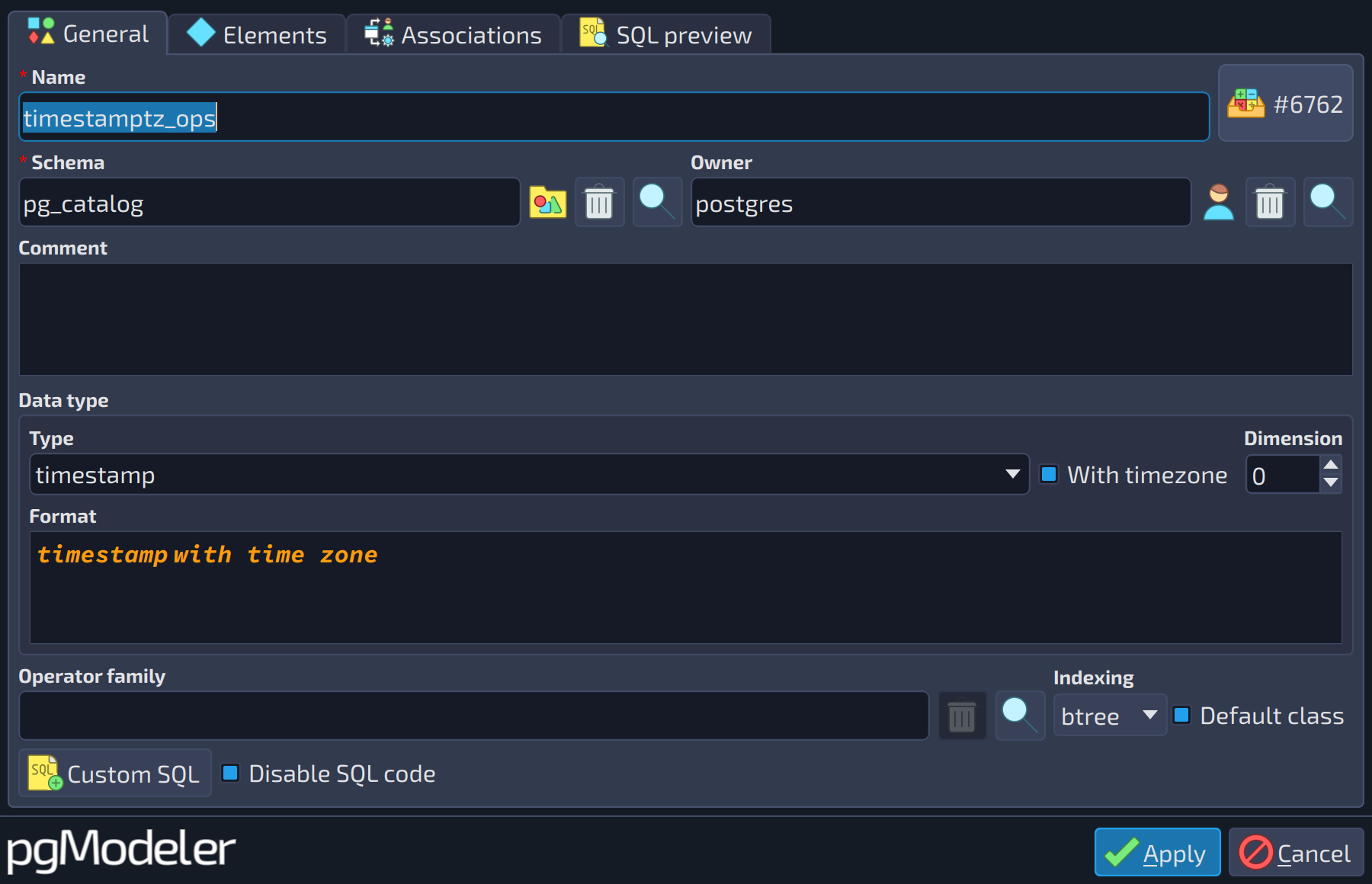 1234567
| General | |||
|---|---|---|---|
| # | Field | Group box | Description |
| 1 | Type | Data type | The data type. Besides the built-in types, the list also holds the user-defined types, domains and other types of the model. |
| 2 | With timezone | Data type | For the |
| 3 | Dimension | Data type | Number of dimensions when the type is an array ( |
| 4 | Format | Data type | Read-only preview of the data type as it is written in the SQL code, with length, precision, dimension and other modifiers applied. |
| 5 | Operator family | In the tab General, the operator family the operator class belongs to. In the tab Elements, the | |
| 6 | Indexing | Index access method used by the operator class. Possible values are | |
| 7 | Default class | Indicates that the operator class is the default for the specified data type and index access method. | |
Operator class elements
Operator class elements are the smallest units of an operator class. To create a valid operator class, at least one element must exist. These objects can be constructed using an operator, function, or storage data type as detailed in the table below.
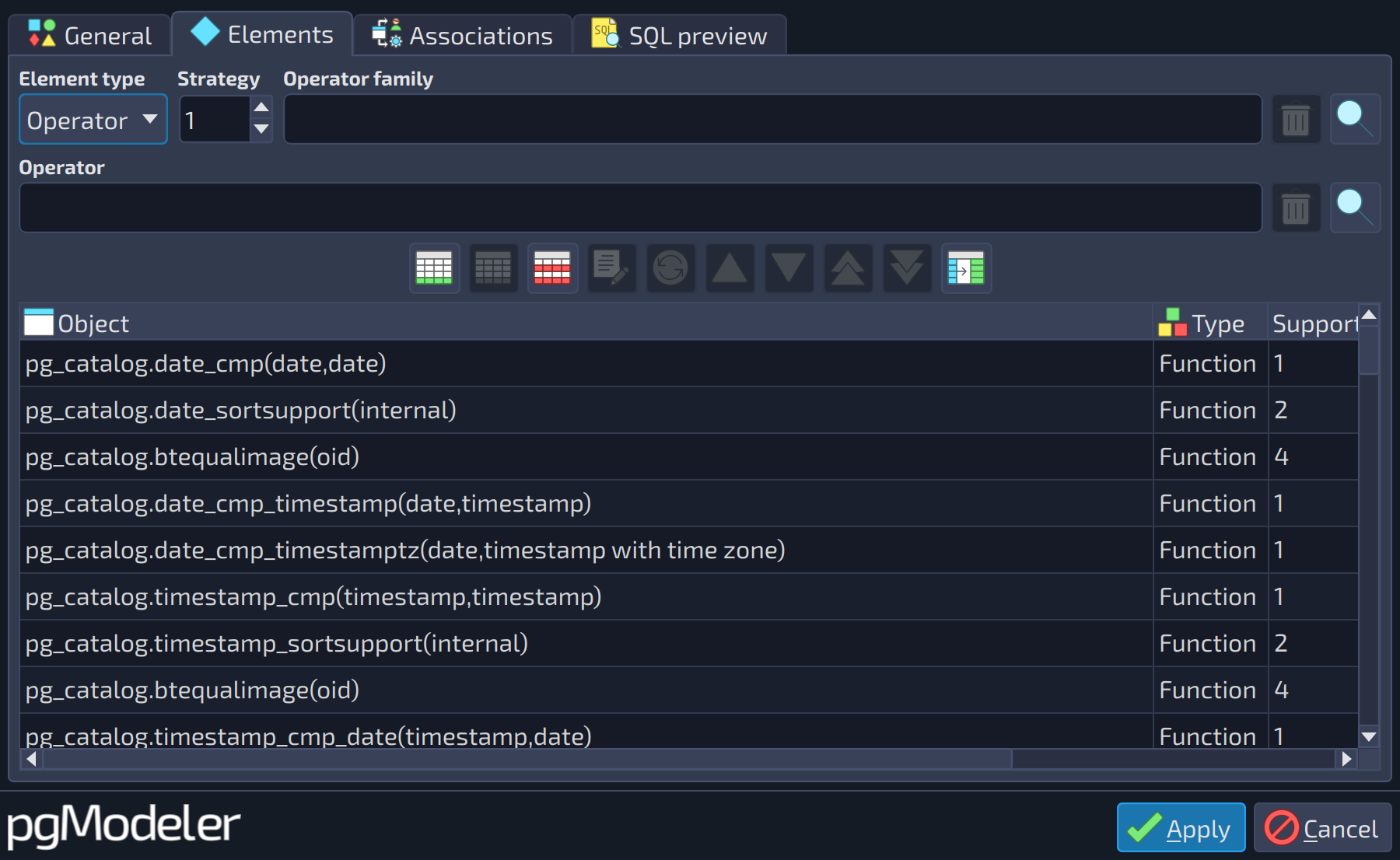 12345
12345
| Elements | ||
|---|---|---|
| # | Field | Description |
| 1 | Element type | Type of the current element: |
| 2 | Strategy | When the element being configured uses an operator this attribute is the index method's strategy number. When the element uses a function it becomes the index method's support procedure number. The value specified here is defined by each index access method used. |
| 3 | Operator family | In the tab General, the operator family the operator class belongs to. In the tab Elements, the |
| 4 | Operator | The operator associated with the current element. |
| 5 | Elements | The elements already added to the operator class. To create a valid operator class, at least one element must exist. |
References
Operator class DDL
https://www.postgresql.org/docs/current/static/sql-createopclass.html
More about operator classes
https://www.postgresql.org/docs/current/static/xindex.html