3.7. Policies
Policies are objects that handle the row-level security system introduced by PostgreSQL 10. Row-level security must be enabled in the table that will receive a policy, so that the policy can be applied to it. A policy grants the permission to select, insert, update, or delete rows that match the relevant policy expression. Existing table rows are checked against the expression specified in USING, while new rows that would be created via INSERT or UPDATE are checked against the expression specified in WITH CHECK. Policies can be applied to specific SQL commands or to specific roles. The following image and table show the policy object attributes.
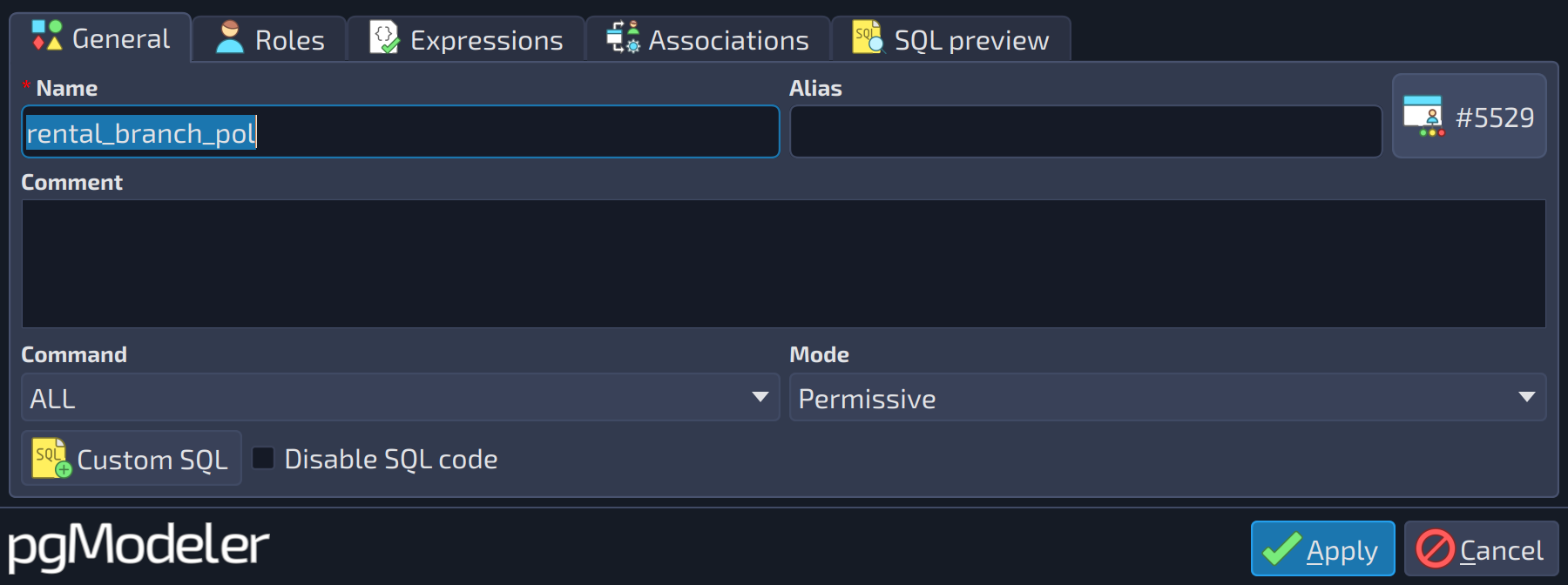 12
12
| General | ||
|---|---|---|
| # | Field | Description |
| 1 | Command | The command to which the policy applies. The possible values are |
| 2 | Mode | Specifies the kind of policy. A |
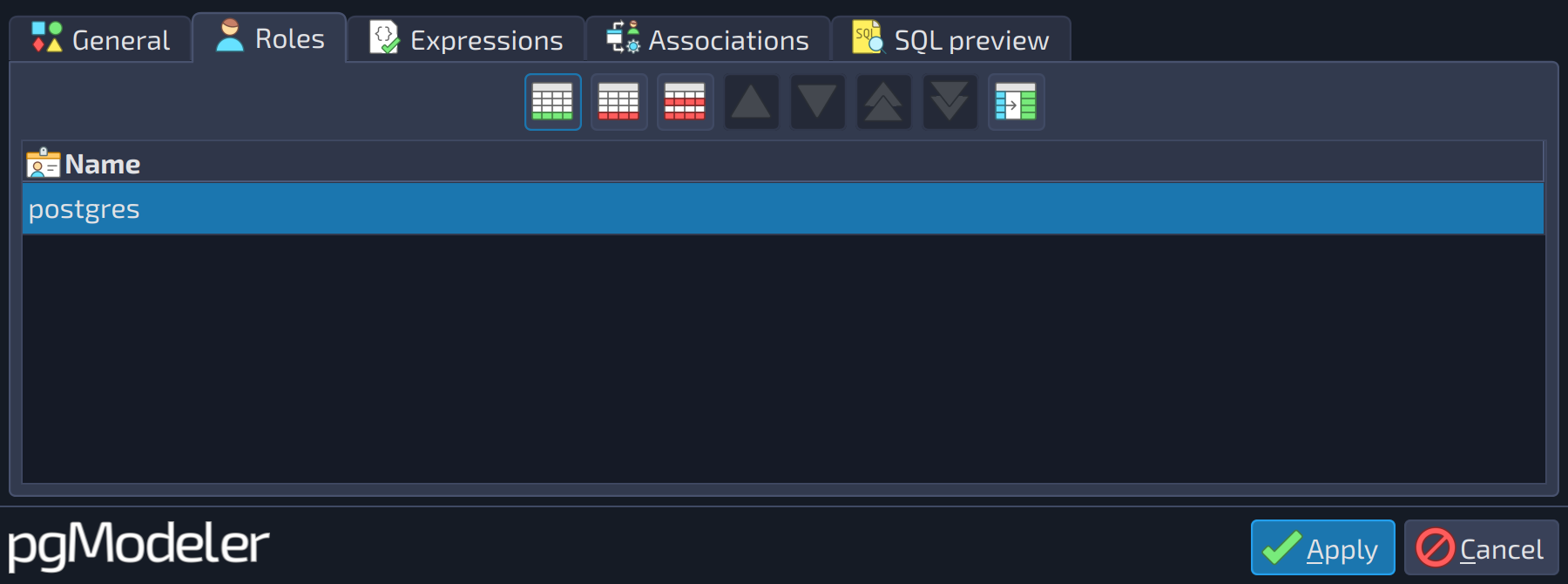 1
1
| Roles | ||
|---|---|---|
| # | Field | Description |
| 1 | Roles | The roles to which the policy is applied. Leaving the list empty creates a policy that is applied to all roles ( |
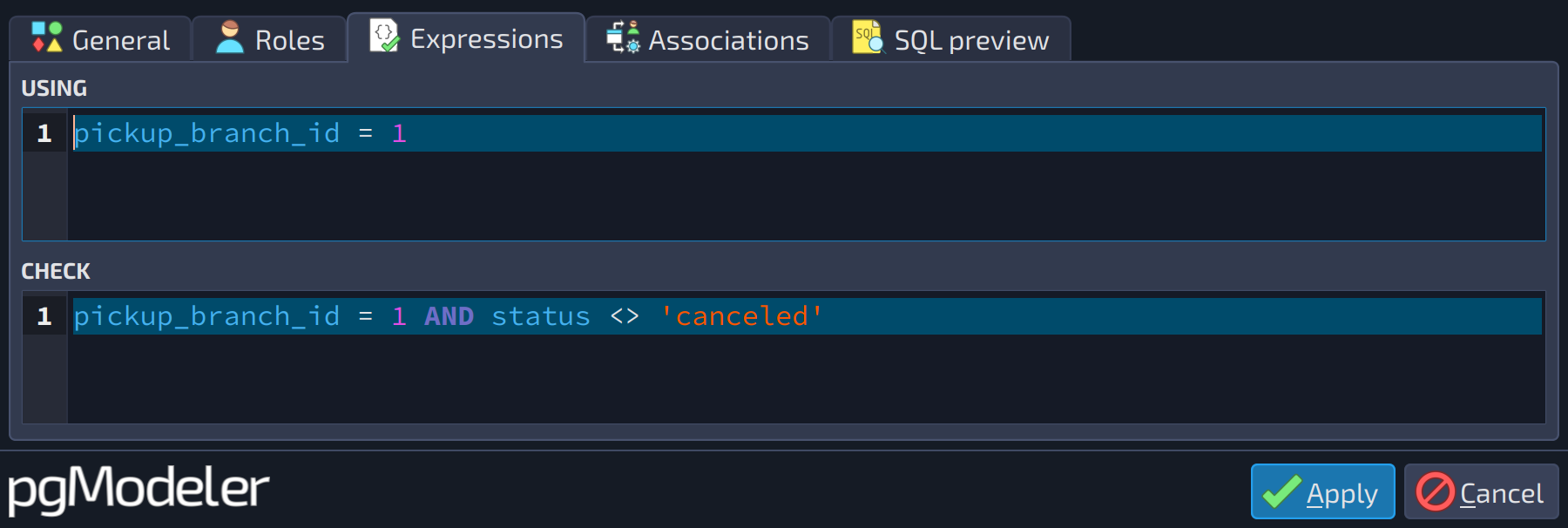 12
12
| Expressions | ||
|---|---|---|
| # | Field | Description |
| 1 | USING | A boolean expression added to the queries that refer to the table. Rows that match it are the ones made visible ( |
| 2 | CHECK | A boolean expression applied to |
References
Policy DDL
https://www.postgresql.org/docs/current/static/sql-createpolicy.html