After an extensive development cycle focused on refinement, platform modernization, and long-term architectural improvements, we are proud to announce the release of pgModeler 2.0.0-beta. This release marks one of the most important milestones in the history of the project.
Over nearly two decades, pgModeler has evolved from a community-driven PostgreSQL modeling tool into a mature platform used daily by developers, database administrators, architects, consultants, educational institutions, and companies worldwide. Throughout this journey, the project continuously expanded in complexity, feature coverage, and real-world adoption across increasingly demanding environments.
The 2.x generation represents a significant step forward in that evolution. Rather than focusing exclusively on introducing new features, pgModeler 2.0 prioritizes something equally important for professional environments: stability, usability, workflow consistency, maintainability, and long-term sustainability. This beta release reflects a substantial effort to refine the overall user experience, modernize several parts of the platform, improve operational reliability, and prepare the project for the next phase of growth.
It also introduces an important structural transition for the platform itself with the formalization of the new Community and Plus editions. This new model establishes a clearer separation between open-source modeling workflows and advanced professional database lifecycle management capabilities, while ensuring the project's long-term sustainability and continuous evolution.
Across Linux, Windows, and macOS, pgModeler 2.0.0-beta delivers improvements touching nearly every aspect of the platform — from interface consistency and SQL management workflows to diagnostics, synchronization reliability, plugin extensibility, and overall operational resilience. This release is not simply another incremental update. It represents the foundation of a new phase for pgModeler and the broader ecosystem being built around it.
A better everyday experience
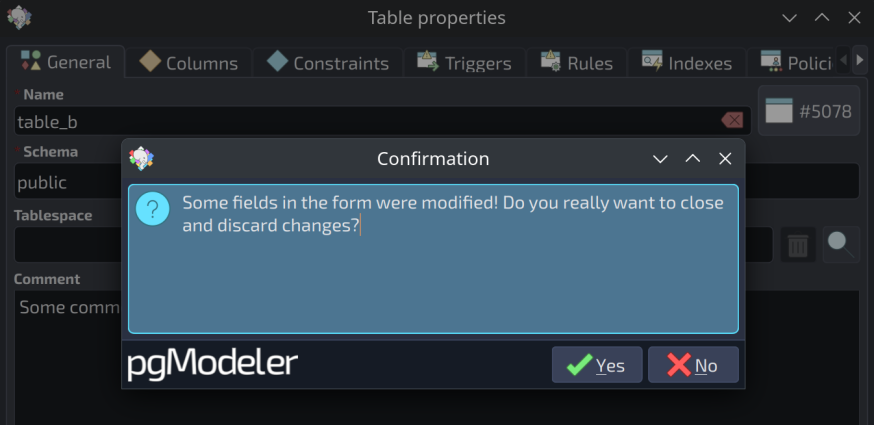
One of the key goals of pgModeler 2.0.0-beta was to reduce friction during daily work. A good example is the new unsaved changes protection. If you accidentally press Escape while editing an object, pgModeler now detects pending modifications and asks for confirmation before discarding your work. It is a small change on paper, but one that prevents a surprisingly common and frustrating source of lost work.
The overall interface also received a significant refresh. pgModeler now ships with the Exo 2 font as the new default UI font, while model object labels now use the Montserrat font family for improved readability and visual consistency. Users can also customize the application font directly from the Appearance Settings using any font installed on their system.
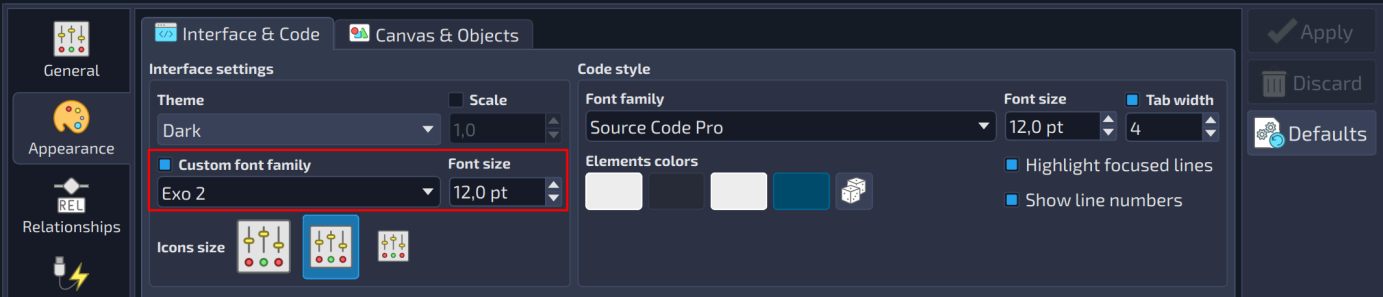
Across Linux, Windows, and macOS, icons, splash screens, and pop-up menus were redesigned to provide a cleaner and more modern visual identity. Several smaller usability improvements were also introduced throughout the application:
- File dialogs now automatically append the correct extension when saving models or exports.
- Recent files now display their full path in tooltips, making it easier to distinguish projects with identical names.
- Settings dialogs now behave more consistently when changes are discarded or reverted.
- Visual refinements across themes and forms improve readability and reduce interface clutter.
These are subtle changes individually, but together they contribute to a much smoother experience during long working sessions.
SQL management improvements
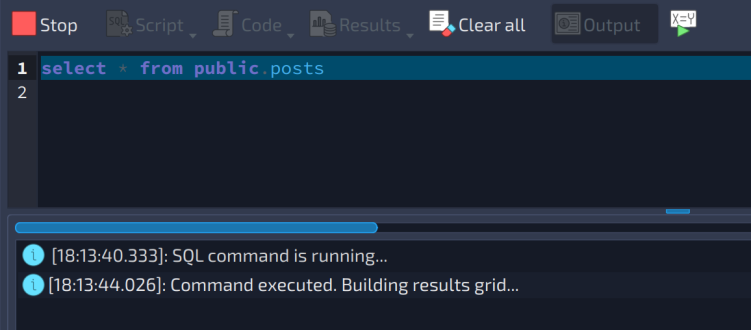
For DBAs and developers working directly with large datasets and SQL execution, this release introduces several quality-of-life improvements. Result loading operations can now be cancelled at any time, and progress indicators provide better feedback while queries are being processed.
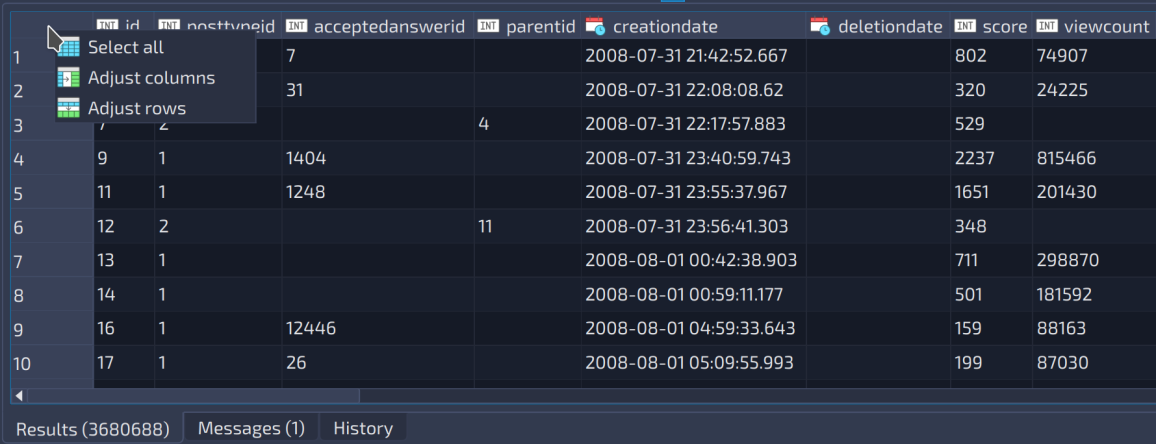
The SQL results grid also received new context menu actions for selecting all rows, auto-fitting column widths, and auto-fitting row heights. Additionally, pgModeler now warns users before attempting expensive resize operations on result sets larger than 10,000 rows, helping prevent interface freezes on massive queries.
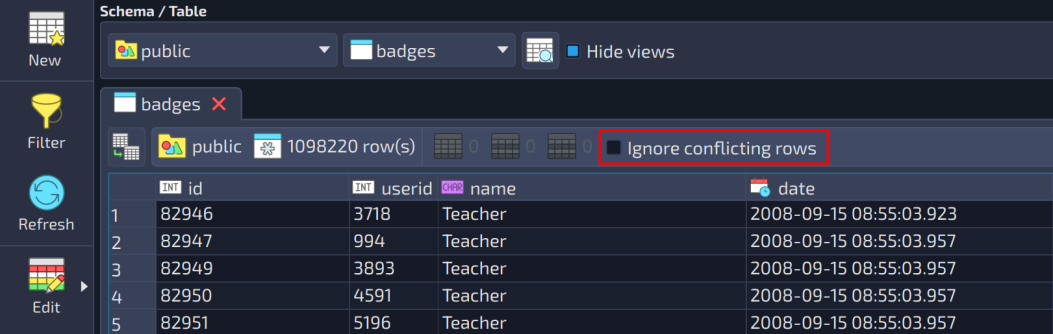
The data grid was also improved to better support bulk operations by allowing conflicting rows to be skipped silently during inserts when desired. pgModeler also now exposes the server character encoding directly in important management views, helping teams quickly identify incompatibilities before they become data handling issues.
Better diagnostics and stability
Stability and reliability were major priorities during this beta cycle. A considerable amount of work was dedicated not only to fixing crashes and edge cases, but also to improving how pgModeler behaves under complex real-world scenarios involving large models, extension-heavy databases, imports, synchronization operations, and multi-platform usage.
The command-line interface now generates detailed diagnostic reports whenever unexpected failures occur. These reports provide significantly better visibility into problems and greatly simplify troubleshooting and support workflows. Several other important stability improvements were implemented across the platform, including fixes for:
- Crashes that could occur after synchronization operations.
- Issues when creating tables containing indexes during editing.
- Instability while exporting models as PNG images through the CLI.
- Application freezes caused by font rendering loops.
- Crashes triggered by empty query results in SQL management views.
- Problems affecting navigation history and recent models tracking.
- Incorrect handling of database connections after discarding settings changes.
- Interface inconsistencies on macOS and Windows when using custom fonts.
Database modeling and synchronization reliability also received important improvements. This release fixes multiple situations where synchronization scripts could previously generate incomplete or inaccurate changes, including:
- Column precision and length modifications are not being detected correctly.
- Inherited constraints generating false-positive changes.
- Malformed synchronization commands involving partitioned tables or extensions.
- Duplicate permissions being generated during reverse engineering.
- Import inconsistencies involving PostgreSQL extensions, collations, operators, foreign tables, and custom types.
Finally, compatibility with LATIN1-encoded databases was improved through internal infrastructure changes, resolving problems previously reported during import and synchronization operations.
Overall, this beta cycle focused heavily on reducing friction, improving predictability, and making pgModeler more resilient for professional environments where stability matters as much as features.
Plugin ecosystem improvements
Plugin developers now have greater flexibility when integrating custom tools into pgModeler. Now, custom plugins are capable of:
- Dock panels in different application areas.
- Integrate directly with the welcome screen.
- Operate without visible docked components entirely.
These changes open the door for more advanced integrations and workflow extensions in future releases. One of the most important examples of this new extensibility direction is the upcoming Git integration plugin, currently under active development. This new module will introduce native model versioning workflows directly inside pgModeler, allowing teams to better track schema evolution, collaborate on database changes, and integrate modeling activities into modern development pipelines.
The full release of the Git integration plugin is planned alongside the final release of pgModeler 2.0. However, a first feature preview is already scheduled to arrive during the 2.0.0-beta cycle, giving the community an early look at the future of collaborative database modeling inside the platform.
Community and Plus Editions
pgModeler 2.0.0-beta also marks an important structural milestone for the project with the formal introduction of the new edition model. Starting with this release, pgModeler is now clearly organized into two distinct editions: pgModeler Community and pgModeler Plus.
The previous legacy demo mode has been completely removed from the codebase. This means the Community Edition is now distributed as a clean and unrestricted open-source experience within the scope of its intended feature set, without hidden limitations or artificial restrictions.
The Community Edition remains fully open source and continues to serve as the foundation of the entire platform. It focuses on PostgreSQL schema design, visual modeling, SQL generation, and educational or development workflows. Most importantly, it continues receiving active maintenance, PostgreSQL compatibility updates, bug fixes, usability improvements, and ongoing evolution.
The Plus Edition expands the platform with advanced database lifecycle management capabilities designed for professional environments, including:
- Reverse engineering.
- Database diff and synchronization.
- Integrated database management tools.
- Advanced operational workflows.
This separation allows the project to establish a more sustainable long-term development model while ensuring that the Community Edition remains healthy, modern, and continuously evolving. For teams and companies using pgModeler in production environments, this new structure also creates a clearer distinction between open-source modeling workflows and advanced operational tooling intended for professional database management scenarios.
Most importantly, both editions continue sharing the same core platform and architecture, meaning improvements made to the foundation of pgModeler continue benefiting the ecosystem as a whole.
Looking Ahead to 2.0 Final
With the release of 2.0.0-beta, pgModeler enters a much more stable pre-release phase. The focus from this point forward is polishing, refinement, performance tuning, and incorporating community feedback before the final 2.0 release.
This new generation of pgModeler represents not only technical evolution but also a long-term commitment to sustainability, reliability, and continuous improvement for the PostgreSQL ecosystem.
Thank you to everyone who continues supporting the project, contributing feedback, reporting bugs, and helping shape the future of pgModeler. The journey toward pgModeler 2.0 continues — and this is only the beginning.
Add new comment